


Editor’s note: This story has been updated to reflect the reopening of the health centers.
by Kate Shunney
Patients of Tri-State Community Health Centers in Berkeley Springs, W.Va.; Hancock and Cumberland, Md. and McConnellsburg, Pa. were not able to seek medical care at those centers for most of last week, as the clinics were closed under short notice because of administrative issues.
On Monday, two local clinics – one in Hancock and one in Berkeley Springs – were open for patient care.
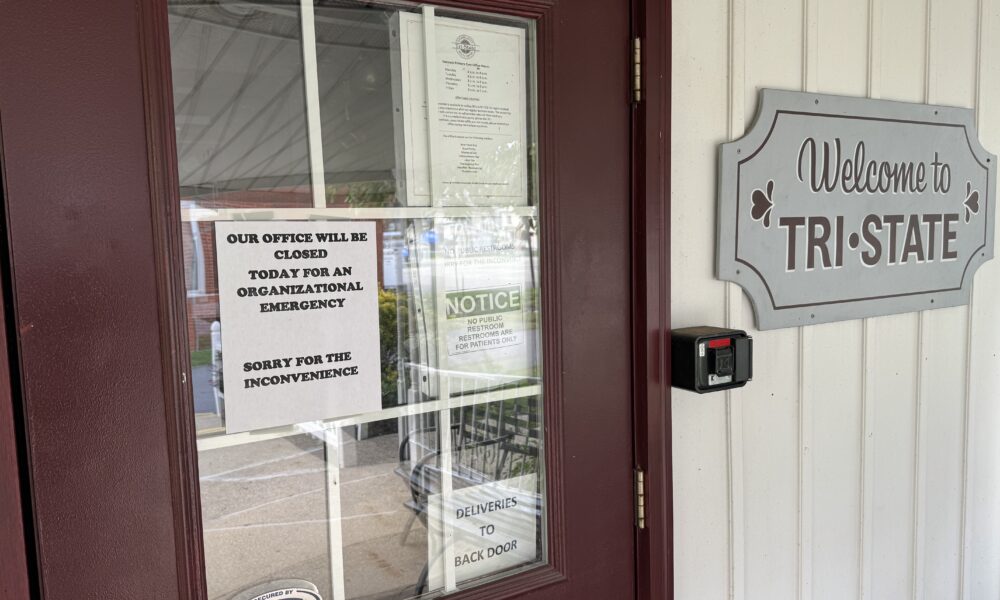
Last Thursday, September 24, visits to the Berkeley Springs and Hancock center locations found the facilities locked and signs hanging on the doors.
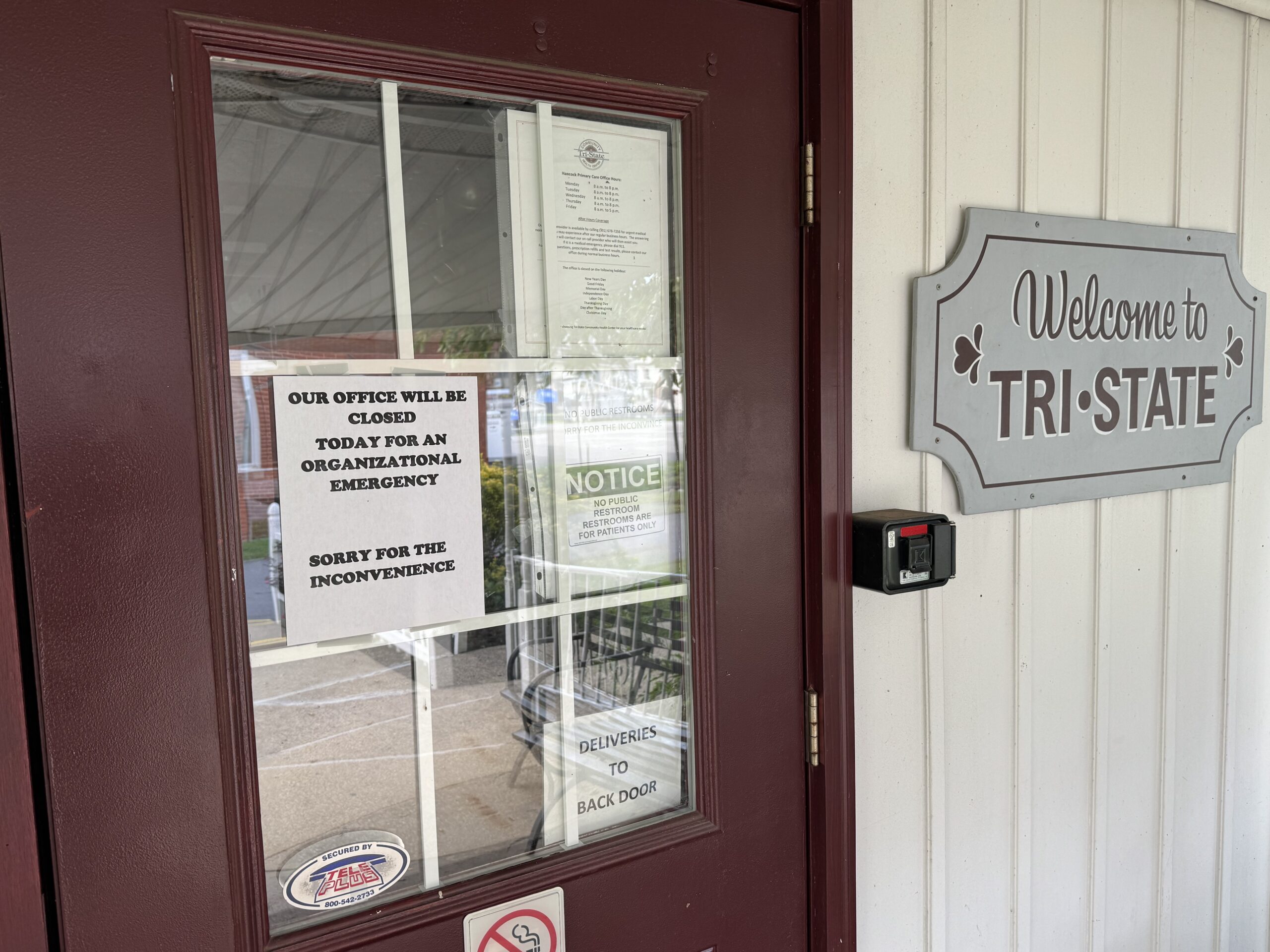
photo by Geoff Fox
In Berkeley Springs, the sign said, “Our Office is facing an organizational emergency and our doors will be closed until further notice. Sorry for the inconvenience.”
In Hancock, the sign said “Our Office will be closed today for an organizational emergency. Sorry for the inconvenience.”
A phone call to the administrative offices of Tri-State Community Health in Hancock seeking comment was returned by the organization’s new interim CEO, David Olson.
Olson explained that Tri-State is a federally qualified health center (FQHC) that operates under federal rules and guidelines directed by the U.S. Health Resources & Services Administration (HRSA).
“We are dealing with some requirements from HRSA,” Olson said. Those issues have forced five clinic locations to shut down.
Olson said he couldn’t comment right now on what those requirements are affecting the clinic operations. Olson started the prior week as the interim CEO, he said.
He said about six months ago, HRSA “started to make changes about how they deal with issues” at health centers and Tri-State officials have been in regular touch with the federal agency to supply data and other required information.
“We’ve submitted information needed to get back open,” said Olson on Thursday.
As a federally-funded community health clinic, Tri-State primarily serves individuals who have Medicaid health insurance for low-income or disabled people, and those who have no health insurance coverage at all. These are historically medically underserved populations.
Olson said he and his staff have been working with HRSA to reopen after the temporary closure.
Patients of the five clinics were contacted about the closure and their appointments were either rescheduled or they were referred somewhere for more urgent matters, Olson said in response to questions about patient communications over the sudden closure.
“We’re trying to minimize the impact as much as possible,” he said last week. “The last thing we want is for our patients or the community to be negatively impacted.”
According to comments made on social media, some patients of Tri-State had been having trouble getting their medications through the clinics for weeks due to a disconnect between the clinics and patient insurance providers.
A staff member at Tri-State’s administrative office said she couldn’t comment on whether the longtime CEO Susan Walther was still with the organization.
“Part of my job will be to help Tri-State find a permanent CEO,” Olson told The Messenger.
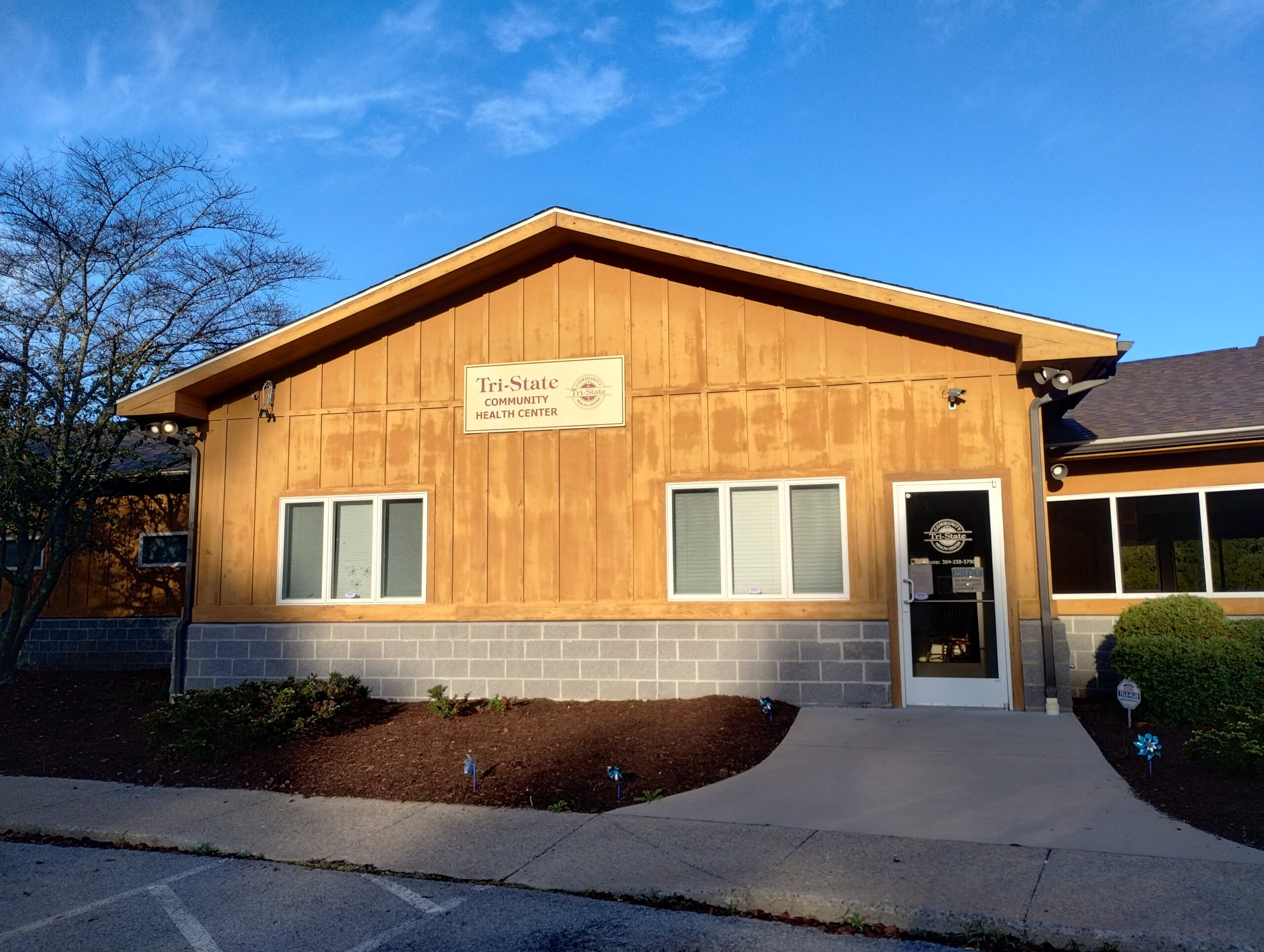
photo by Kate Shunney
Tri-State Community Health Center was incorporated in 1987 as a non-profit organization to provide primary healthcare services in the region.
According to HRSA databases, Tri-State Community Health served 16,085 patients in 2025. Of those, 70.8% are patients with income at or below 200% of the federal poverty guideline. The clinic served 2,123 children under the age of 18, plus 10,795 adults aged 19 to 64 and 3,167 older adults.