

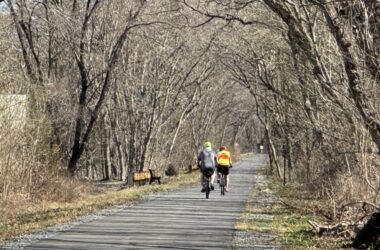


by Kate Evans
As summer progresses, more individuals and families on bicycles are seen on the road.
A large percentage of crashes involving bikes can be avoided if motorists and cyclists follow the rules of the road and watch out for each other, according to information from the National Highway Safety Council’s website.

Officials say that when there is an accident that happens between a vehicle and a bicycle that the cyclist is the most likely to be injured. Learning about bicycle safety tips, the rules of the road , having a properly fitted helmet and driving defensively are all important to preventing bicycle injuries and deaths.
Some 1,166 bicyclists were killed in traffic crashes in 2023. Bicyclist deaths are the highest during the summer between June and September. Failing to yield the right-of-way is the biggest factor in fatal bike crashes, followed by bicyclists not being visible.
Choosing and fitting a bicycling helmet is important .Ensure a proper fit so your helmet so your helmet can protect you. Sizes can vary. Adults and children should both wear helmets when riding a bike.
Remember to ride a bike that fits you. If it’s too big, it’s much harder to control. Ride a bike that works. It doesn’t matter how well you ride if the brakes don’t work.
Wear protective equipment
Wear equipment to protect you and make you more visible to others , like a bike helmet, bright, neon or fluorescent clothing, a white front light and red rear light and reflective gear.
Avoid crashes-falls and crashes with cars. Ride responsibly and remember that all states require bicyclists on the roadway to follow the same rules and responsibilities as motorists.
Advice from the National Highway Safety Council’s website recommends riding one person per seat, unless signaling a turn.
Carry all items in a backpack or strapped across the back of the seat.
Tuck and tie your pants legs and shoelaces so they don’t get caught in your bike chain.
Choose routes with less traffic and slower speeds.
Be focused and alert
National Highway Safety Council officials say drive your bike defensively and be focused and alert to the road and the traffic around you.
Drive with the flow, in the same direction as the traffic and anticipate what others will do.
Obey street signs, signals and road markings, just like a car.
Look ahead for hazards that may cause you to fall.
Don’t text, listen to music or use any equipment that could distract you from the road.
Look over your shoulder before changing lane position or turning.
Watch for pedestrians. Pass them with care.
Look for cars backing out of driveways or turning. Obey the speed limit.
To improve your riding skills, start by riding your bike in a safe environment away from traffic.
Inspect your bike first
Always inspect your bike before riding. Make certain all parts are working properly. The seat should be adjusted to the correct height and properly locked.
Make sure the tires are inflated properly and that the bike has reflectors on the rear, front, pedals and spokes.
A horn, bell, a rear-view mirror and a bright headlight are also advised.
Take an on-bike class through your school, recreation department, local bike shop or bike advocacy group. Learn how to navigate and communicate with other drivers, bicyclists, and pedestrians.
Use hand signals when turning. Before entering traffic, stop and look left, right, left again and over your shoulder.
Ride during the day if you can. If you must ride at night, wear reflective clothing and use flashing lights.