




by Geoff Fox
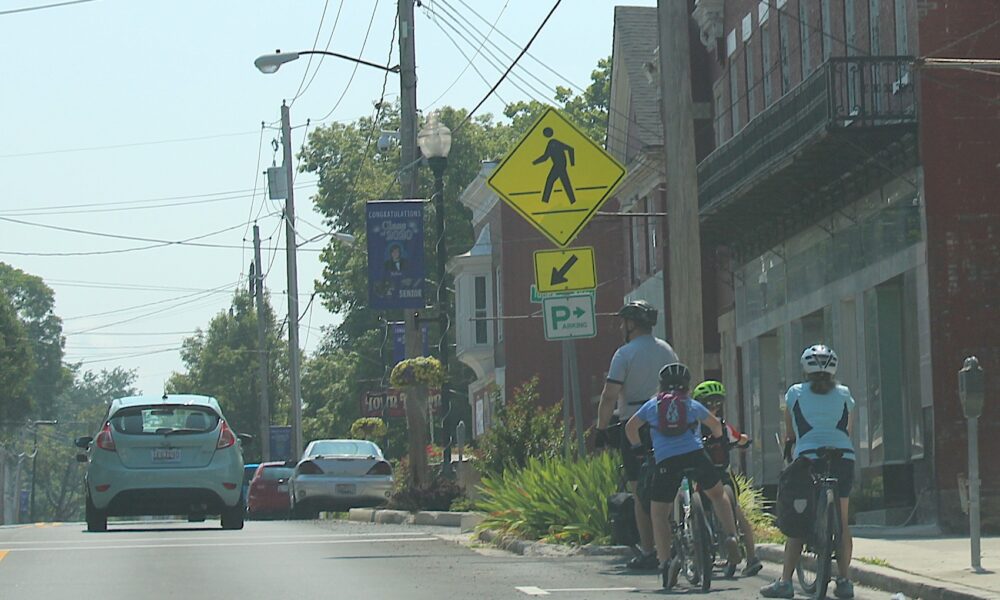
The Town of Hancock and Hancock Police Department have recently been getting complaints and questions regarding the way people on bicycles have been riding on the streets of Hancock.
In the state of Maryland, including Hancock and Washington County, bicycles are legally defined as vehicles which means riders enjoy the same rights as those in cars and trucks and must follow the same general rules.
Both Hancock officials and police wanted to remind people who ride their bikes, especially on Main Street, about what the Maryland laws and town ordinances are regarding riding bikes in town. 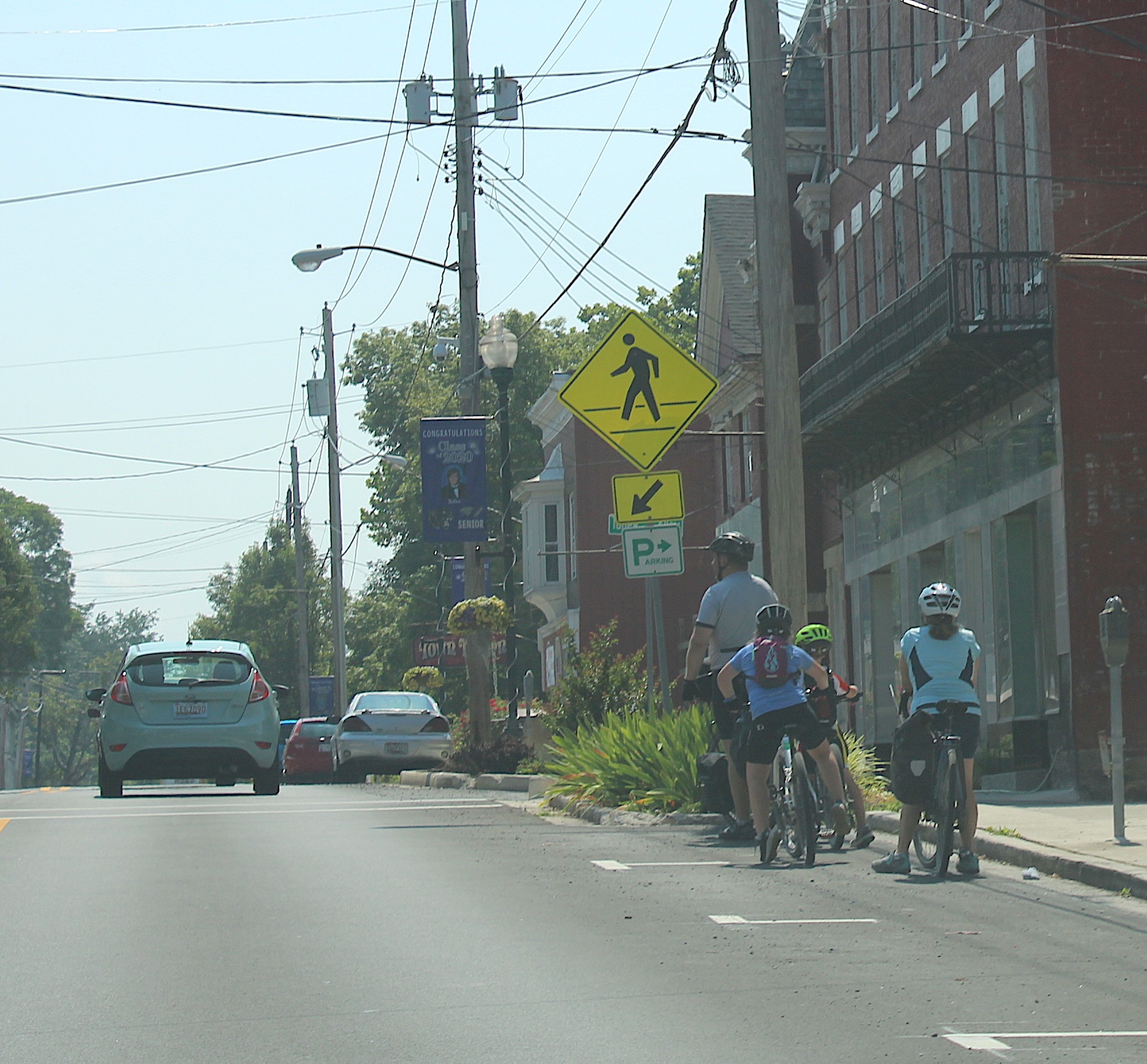
According to the state, all operators and passengers of bicycles under the age of 16 must wear a properly fitted bicycle helmet on public roads, trails, and sidewalks.
The Hancock Police Department strongly recommends helmets for riders of all ages.
When riding at night, bikes must be equipped with a front white light visible from at least 500 feet and a rear reflector of light visible from at least 150 feet, although state guidelines recommend visibility up to 600 feet.
Bikes must feature a functional brake system capable of making the braked wheels skid on dry, clean, level pavement.
Police also warn that riders must keep at least one hand on the handlebars at all times and are restricted from riding with both ears plugged by headphones or dual earplugs.
There are also a few rules of the road police said should be followed.
When riding along the road, cyclists must stop at all red lights and stop signs, ride with the flow of traffic and never against it, and use the proper hand signals for turns and stops.
As they ride along the roads, cyclists should ride as far to the right side of the road as practical, or use designated bike lanes when available.
They may take more lane of the road to avoid road hazards, prepare for a left turn, or if the lane is too narrow to share safely.
Police also warn that riders should never ride more than two abreast on a roadway and drop into single file if they are impeding traffic.
It’s known that you can’t drive a car while under the influence, but Maryland’s law for DUI also applies fully to anyone operating a bicycle.
Recently, electric bicycles, or E-Bikes, have become a popular mode of transportation and in Maryland.
The state recognizes three specific e-bike classes with 750W or smaller motors – Class 1, which is pedal-assist only, up to 20 miles-per-hour; Class 2, which is throttle-powered, up to 20 miles-per-hour; and Class 3, which is pedal-assist only, up to 28 miles-per-hour and operators must be at least 16-years old to operate.
Legal e-bikes do not require registration, driver’s license, or insurance, but the riders under 16 must still wear a helmet.
Across the board, drivers must provide at least three feet clearance when passing a cyclist on the road.
In 1999, the Town of Hancock adopted an ordinance outlining rules for riding bikes in Hancock.
According to the ordinance, the rider of a bicycle or play vehicle, which the town defines as skateboards or roller skates, should have the vehicle under proper control and shall not operate or propel the bicycle on any of the streets of Hancock recklessly or at a rate of speed greater than is reasonable and proper.
They should not use the street or highway so as to endanger property of any person.
All operators of bicycles or play vehicles shall at all times comply with all other traffic regulations in force in the Town Hancock and pursuant to the traffic regulations for the state of Maryland.
The town’s ordinance also states bicycles are not allowed on sidewalks.
It states it is unlawful for the bicycles, motor vehicles or play vehicles on, over or upon public sidewalks within the town except during those periods requiring the removal of snow from the sidewalks.
It is also unlawful to ride the bicycles on any sidewalk, tennis court, basketball court, pavilion, swimming pool in any park or playground owned, operated, and/or maintained by the Town of Hancock except in those areas designated as “riding areas” or except places like public highways or roads.
The town also has it marked unlawful for any person or groups to ride or operate a skateboard, bicycle, or play vehicle on any parking lot owned, leased, or operated by the Town of Hancock except in designated areas as “riding areas” by the Town of Hancock.
The ordinance states any bicycle found to be in violation of the ordinance can be impounded by the police and removed from the public throughfares of the town.
The impounded bicycle would then be returned to the parent/guardian over the age of 18 after the $10 impounding fee is paid.
If a bicycle is located and turned into police that has been deemed as abandoned within the town limits, the Police Department will impound the bicycle if they can’t locate the true owner.
When the unclaimed impounded bicycle is claimed after 30 days and the owner isn’t known or the owner is known and has been notified in writing of the impoundment, the police can sell the bicycle at a public sale to the highest bidder after having been duly advertised by a publishing notice of the time and place of sale at least once 10 days prior to sale in a newspaper within Washington County.
Of course there are also penalties to go along with the violations.
Any person violating any of the provisions in the ordinance, on conviction thereof before the court having jurisdiction, shall pay a fine.
That fine for anyone violating may be determined to be guilty of a violation is $25. Repeat offenses within one year from the initial violation would be subject to a $50 fine or confinement in the Washington County Detention Center for a period of no more than 30 days, or be both fined and imprisoned at the discretion of the court.
In the event any law enforcement agency acting within the jurisdiction limits of the Town of Hancock observes any minor child operating a play vehicle, motor vehicle, and/or bicycle in violation of the ordinance, the officer may confiscate the motor vehicle, play vehicle, and/or bicycle by the minor child and return the bicycle or vehicle to the parent or guardian.
The officer shall be authorized to confiscate a bicycle under the provisions of the ordinance whether or not he or she issues a citation for the violation.
In addition to the fines and penalties, the mayor and council of the Town of Hancock can take other actions to enforce the town’s rules. The town’s bike ordinance took effect on May 9, 1999.