




by Geoff Fox
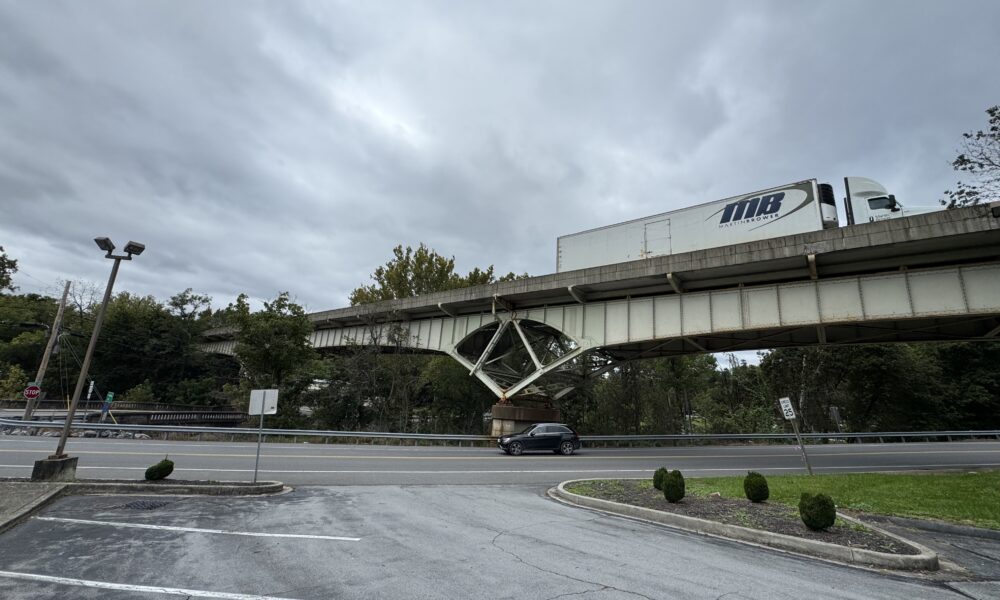
There are 2,574 bridges in the Maryland State Highway System, 24 of which are rated as poor. One of those 24 is the U.S. 522 bridge connecting Maryland and West Virginia in Hancock.
The number of “poor” rated bridges decreased from 143 in 2005 to 20 in 2025, and then increasing slightly to 24 in 2026.
Of those 24 bridges, seven are in Washington County, six of which are along Interstate 70 in the Hagerstown area. The highway sees 62,680 vehicles each a day. Only the I-70 ramp A over Beaver Creek sees less at 37,200.
The U.S. 522 bridge, built in 1937, sees 10,550 vehicles cross it each day.
According to the Federal Highway Administration (FHWA), the bridge is under construction for minor rehabilitation.
Repairs to the concrete piers on the 522 bridge were completed this past July and addressed the poor rating for the substructure component, said SHA Spokesperson Charlie Gischlar.
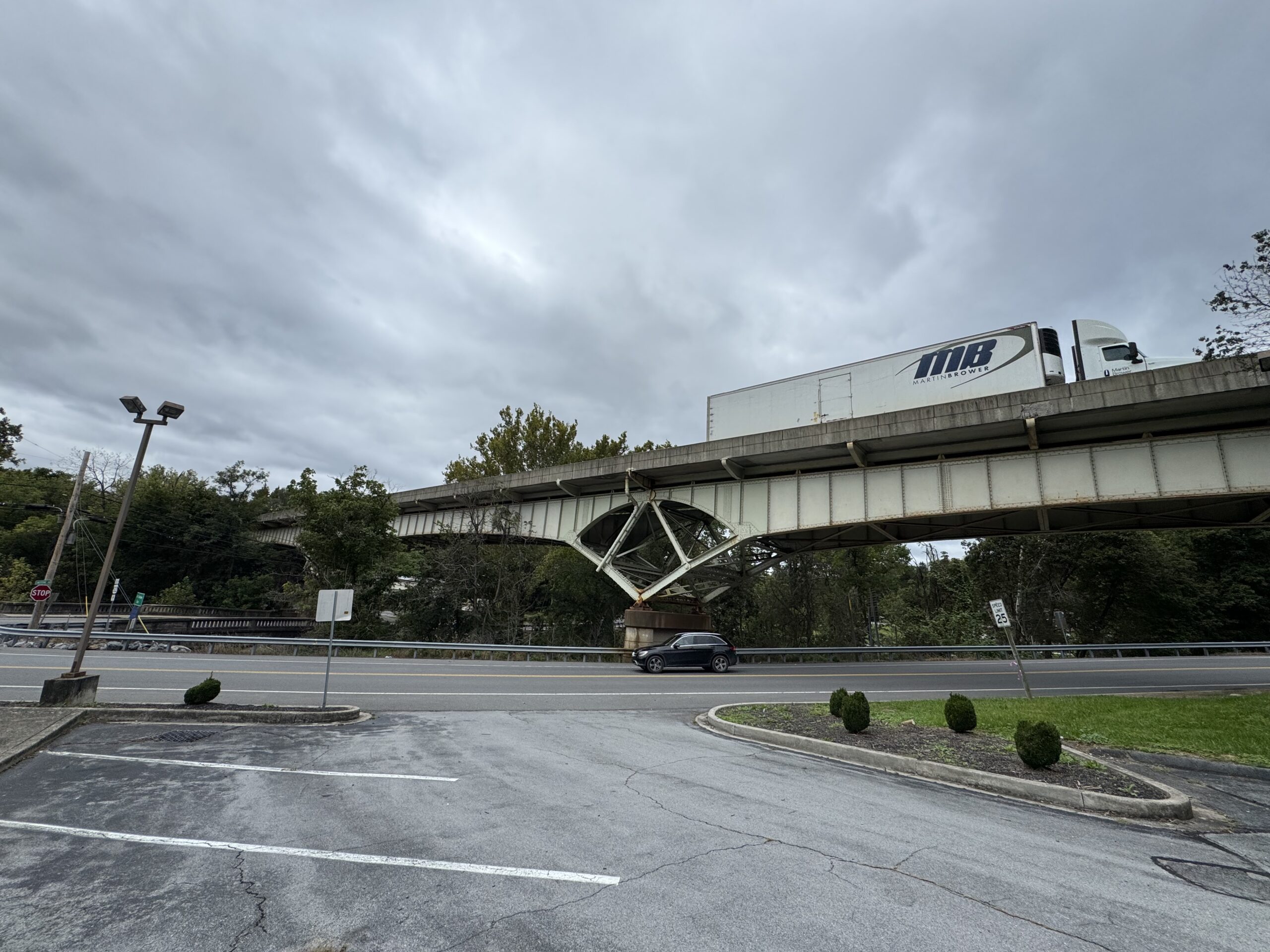
photo by Geoff Fox
In the coming weeks, he added, steel repair work will start to address the poor rating for the superstructure.
The main components of a bridge are deck, superstructure, and substructure which are rated on a scale of zero (closed to traffic) to nine (relatively new).
The deck of the bridge is the riding surface; the superstructure is the main supporting element of the deck, usually beams, girders, trusses, etc.; and the substructure supports to hold up the superstructure and deck, usually abutments and piers.
Both the sub- and superstructure of the 522 bridge had earned a four. Gischlar said if any of the three components in the FHWA’s report were rated as a four or less, the bridge would be categorized as being in poor condition by federal regulations. They’ve both had that rating since an October 2023 inspection.
The bridge’s deck received a five.
“This does not mean that the bridge is unsafe,” Gischlar said. “If a bridge becomes unsafe, it will be closed to all traffic until repairs are completed, which will allow it to be reopened, or it will be posted for a weight the bridge can safely carry.”
He said the poor condition designation, which is a result of an in-depth, hands-on bridge inspection, is an early warning sign that engineers use to prioritize funding and to initiate preservation, rehabilitation, or begin the design process to replace a bridge.
When the steel repairs begin, they will be below the deck but require access equipment on the deck and a flagging operation to alternate traffic.
The repairs, Gischlar said, would be during daytime hours between 9 a.m. to 3 p.m., Mondays through Thursdays to limit public impacts while allowing safe and visible access for the construction and inspection staff.
Gischlar said, weather permitting, the repairs are expected to be completed by mid-October 2026.
Earlier this year, MDOT was asking for $1.2 million from the Bridge Investment Program to prepare a Planning and Environmental Linkages (PEL) study for the bridge for a major rehabilitation effort.
When asked if there were any updates on the study, Gischlar said there are no active studies to replace the bridge and just that a Bridge Improvement Grant application to perform the PEL study had been submitted.
Gischlar said SHA has among the lowest number of “Poor Rated” bridges in the nation, thanks to their aggressive Bridge System Preservation Program.
“This is thanks to the Moore-Miller Administration and the Maryland General Assembly’s funding increases to the Transportation Trust Fund over the past several years,” he said.
The other Washington County bridges are: eastbound I-70 over I-81, eastbound I-70 over US 11 (Virginia Avenue), westbound I-70 over US 11 (Virginia Avenue), eastbound I-70 over MD 632 (Downsville Pike), westbound I-70 over MD 632 (Downsville Pike), and I-70 Ramp A over Beaver Creek.