




by Daniel Leaderman
Members of Maryland’s forestry sector are celebrating a recent executive order they hope will give a much-needed boost to the industry – and help pave the way for broader use of innovative wood products.
The order, signed by Governor Wes Moore in June, directs the state’s Department of General Services to promote the use of wood grown and harvested in Maryland “when wood is a required, preferred, or optimal building material and/or accessory to construction” in publicly-funded state construction projects.
The order cites Maryland’s Sustainable Forestry Act of 2009, which linked the state’s “sustainably managed forests to the health of the Chesapeake Bay watershed.”
“This is a big boost for rural Maryland,” said Bill Miles, chief advocate for the Maryland Association of Forest Industries, who has been lobbying for the state to make just such a commitment. “This is about creating market opportunities in a resource-based industry that employs a lot of people. It could lead to an expansion of the industry in ways we don’t know yet.”
Wood has many uses in construction and infrastructure projects, both as a primary build material – think framing lumber in houses – and as a supplemental resource to assist the construction process.
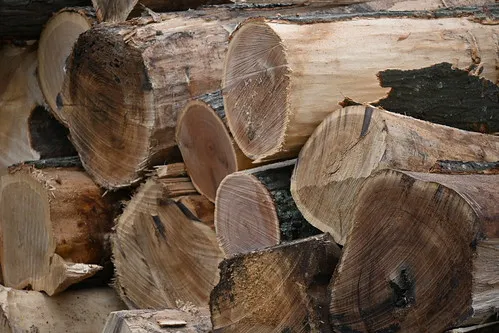
photo courtesy of Maryland DNR
Crane mats, for example, are large wooden platforms on which cranes sit so their massive weight is distributed more evenly and the soft ground beneath is protected; wooden forms are used to hold concrete in the proper shape as it hardens; and wooden debris catchers are often placed under bridge replacement and repair projects to protect the roadways and traffic beneath.
Miles said early discussions about the replacement of the Francis Scott Key Bridge in Baltimore spurred demand for a pledge from the state to prioritize the use of Maryland wood. Rather than use the comparable Southern Yellow Pine that grows abundantly in Maryland, the contractor’s plans called for pine lumber to be brought in from other states, Miles recalled.
Miles worked with Maryland state lawmakers – including Del. Marc Korman and Senator Mary Beth Carozza – and administration officials, including Maryland Secretary of Commerce Harry Coker, Jr., Secretary of Agriculture Kevin Atticks, and Secretary of Natural Resources Josh Kurtz, to bring the issue before the governor.
Since it was signed, the executive order has drawn praise from organizations including the American Loggers Council, which has cited it as a model that should be adopted by the U.S. government to support the use of domestic wood across the country.
Miles also notes that the state spends billions of dollars on public construction each year. If just one percent of that went to purchase in-state wood, it could mean tens of millions of dollars invested in rural Maryland, Miles said.
Businesses say prioritizing the use of Maryland wood products is an easy win for the state.
“We’ve got the same lumber here they’ve got there. It just doesn’t make any sense,” said Kirk Hammonds, executive vice president of Grasmick Lumber, an industrial lumber supplier in Baltimore. Using out-of-state wood creates a “domino effect” down the local supply chain, he said. “You’ve got the sawmills, the loggers…everybody’s getting hurt when that happens.”
Paul M. Jones Lumber employs about 55 people at its main facility in Snow Hill, plus another 25 at its affiliated Hardwood Mills operation in Mullington, said President Kenny Pusey. A major infrastructure project like the Hampton Tunnel in Virginia, on which his company worked, or the forthcoming Frederick Douglass Tunnel in Maryland, could provide two to three years of work for his team. That’s in addition to the loggers who actually cut down the trees and the contract haulers who transport the timber, Pusey said.
The executive order notes that Maryland’s forest products industry generates an annual economic impact of approximately $4 billion and supports as many as 18,000 jobs.
But it has been in decline for decades, according to Beth Hill, executive director of the Maryland Forests Association.
About 25 years ago, there were nine pine sawmills on Maryland’s Eastern Shore; now, there are just three, Hill said.
Ripple effects of the 2019 closure of the Verso Paper Co. mill in Luke, Maryland, were felt across the state, not just in Allegany County.
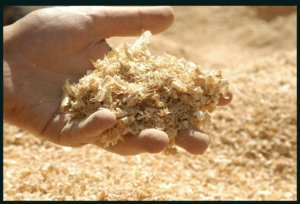
photo courtesy of Maryland Forest Association
Nearly 700 people lost their jobs when the mill closed, and Hill noted that the sawmill once owned by her family used to send two truckloads of woodchips from Dorchester County to the Luke mill every day.
After the Luke mill shut down, stakeholders including the Maryland Department of Natural Resources and the Western Maryland Resource Conservation and Development Council developed an Economic Adjustment Strategy to strengthen Maryland’s forest products industry.
The recent executive order aligns with the four overarching goals of that strategy – supporting existing entrepreneurs; raising awareness of the wood products industry; encouraging innovation in emerging sectors; and enhancing local and international market opportunities – and will help drive discussion of the newly formed Forest Markets Council when it convenes for the first time this fall, Hill said.
Establishing the council, composed of government agencies and forestry stakeholders, was one of the recommendations included in the Economic Adjustment Strategy, along with several dozen suggested steps to grow the forestry workforce, update building standards to encourage the use of local timber, improve supply-chain coordination, and other activities.
“A big part of this effort is going to be educating people on our forest products and wood species here in Maryland. We need to show what we offer and why it’s better,” Hill said, noting that Maryland Southern Yellow Pine tends to be denser than pine grown in more southern parts of the United States, making it stronger and more suitable for many industrial uses.
Hill is also excited by the potential of both the executive order and the council to spur investment in innovative and advanced technology that uses wood products to provide cleaner, more sustainable energy and materials.
Wood-fueled thermal heating systems, for example, can provide a low-cost alternative to fossil fuels like heating oil, she said. That reduced cost, combined with the relative stability of wood prices, which tend not to be as volatile as oil prices, could make budgeting easier and more predictable for facilities like schools and hospitals, Hill said.
Next-generation building materials like those produced by InventWood could also get a boost, Hill said.
The company, a University of Maryland spinout now based in Frederick County, produces a wood-based material that’s up to 10 times the strength-to-weight ratio of steel and six times lighter. It is produced from abundant Maryland forest resources and recycled wood.
“We’ll be keeping our forests healthy, we’ll be supporting our rural economy, and we’ll be meeting our clean energy goals,” Hill said. “We can do all of that together.”